
Roku’s 4K Streamer is a Movie Lover’s Dream (Popcorn Not Included)

Say goodbye to cable

Every time I sit down to pay my cable bill – and I have to sit down when I open the bill – I wonder why I’m shelling out so much for channels I almost never watch. There are only a half-dozen shows that I watch on my 225-channel cable plan, including HBO, Showtime and Cinemax, yet I’m paying dearly for all of them.

Say goodbye to cable

Every time I sit down to pay my cable bill – and I have to sit down when I open the bill – I wonder why I’m shelling out so much for channels I almost never watch. There are only a half-dozen shows that I watch on my 225-channel cable plan, including HBO, Showtime and Cinemax, yet I’m paying dearly for all of them.

A small device with a giant gateway to thousands of streaming channels

What I do watch are streaming programs from Amazon Prime and Netflix. If I want to watch a current movie, I certainly wouldn’t go to a premium channel such as HBO to check out their selection of old content and one-star reruns. I’d buy it on Amazon.

Streaming decent-quality video requires a high-speed wireless connection from your Internet service provider. In my tests, anything lower than 50 bits per second (bps) can cause jerkiness, buffering and pixelation. You don’t want that.

I recently upgraded my wireless connection to super-fast 300 bps, and I bought a 4K TV set, which is the new standard, for this week anyway. But my Roku Streaming Stick ($49), a device that’s capable of streaming in high definition, but not 4K, is so last week. 4K has several times the resolution of most high-definition programming.  Since my cable company doesn’t broadcast anything in 4K, I was curious about how Roku’s high-end device, the Ultra, would perform on streaming services that do have 4K programming.

Beautifully. I chose a program that Amazon is streaming in 4K (“The Patriot”), and pretty much I was blown away. Roku has access to 3,500 free and paid channels. But maybe I should back up and explain some things.

The Roku – there are many models of them, with different quality playback – is a small device that acts as a sort of gateway to thousands of TV channels. Acorn, one of the best, can be accessed through the Roku device and costs $5 a month. The Roku is controlled by a separate remote. (It also can be controlled by a universal remote.) You can choose the channel you want by browsing the Roku home screen. Netflix and Amazon are two of the most popular channels because they offer movies, TV shows and original content. Netflix costs between $8 and $12 a month  — a bargain considering how much content is offered. For example, “House of Cards” and “The Crown” are Netflix originals that are included in Netflix’s monthly charge.  Amazon Prime Video is included in the same account that gives consumers free shipping. It’s an incredible bargain if you do a lot of watching or buying. In addition to older movies and TV shows, which are free, fairly recent-release movies cost about $6 extra on Amazon. If you have a large, flat-screen TV, $6 is a bargain – no parking costs, astronomical ticket prices and expensive popcorn. When you’re in your private screening room, just toss a popcorn bag into the microwave.

I’ve been using Roku players since they first came out. I’ve had Rokus 1- 4, the streaming stick, and I just finished testing the $129 Ultra model. Two cheaper, models, the Premiere ($80) and the $100 Premiere+, also stream 4K content. For most people, the Premiere is more than adequate.

For the extra $50 between the Premiere and the Ultra you get an Ethernet port, which is handy if your wireless signal is weak; a micro SD slot to play back content directly through the device – handy if you’re streaming home movies or photos; a remote that features voice search (“Go to Netflix.”); a point-anywhere remote and a remote finder; ear buds; and gaming buttons on the remote. Both have fast processors and dual-band wireless capability. The Premiere+, which is the next step up, has a micro SD slot and a point-anywhere remote. If you can live without those, you’ll still be getting a top-notch 4K player with the Premiere. I bought the Premiere+ for its micro SD slot.

But wait, there’s this nerdy caveat:

Some low-end 4K TV sets don’t have an HDCP 2.2 HDMI port. It’s not important what that means, but sadly, if that port is missing — it should be marked on the back of the TV set — you can’t get 4K quality. If your TV doesn’t have that kind of port, you’d be wasting your money on a Premiere, Premiere+ or Ultra Roku. Your best bet then would be a Roku Streaming Stick ($50), which does a fine job of playing high-definition content.  I used the Streaming Stick on another high-definition TV, and the picture quality was very sharp. The Streaming Stick plugs directly into an HDMI port – no cable is needed.

Speaking of cables, if you buy the Premiere, Premiere+ or Ultra Roku, you’ll need a second-generation HDMI cable to connect the Roku to the TV set. Amazon sells them for under $10.

HDMI, HDCP 2.2, 4K, micro SD, 1080p or 1080i – watching TV has become complicated. Just ignore the literal meanings of the alphabet soup, and sit back and enjoy your TV set and streaming player. If you’re looking for a great 4K streaming device, any of the three 4K versions Roku offers will give you a TV picture that’s amazingly sharp. Just be sure you pay attention to the alphabet soup. If you don’t have the latest model TV set, a 4K streaming player like the Roku would be a waste of money.

Tech Support Report Card Time

Happy trails, technophiles

Generally, I’ve seen tech support improve over the years – with a few exceptions. Minimum requirements should be toll-free support, knowledgeable and understandable techs and support beyond the first year. Before I buy anything, I check out their support. Are hold times long? Can I understand the tech? Are they familiar with their product? And most of all, can they solve a problem quickly and efficiently?

Happy trails, technophiles

It’s time for my semi-annual roundup of technology tech support. I’ve added a few companies, dropped a few because I no longer use their products and expanded those that I still use.

Acronis: This excellent disk-cloning and backup program (full review here) offers toll-free and no-fee tech support. Techs are offshore, have a comprehensive knowledge of their software, listen carefully and follow up by email after the initial call. Grade: A+

Amazon: Toll-free support features excellent tech support and customer service. By answering a few questions online before you call, the tech knows who you are and your issue. Solutions come fast and reimbursement for returns often comes the same day the return is picked up by UPS. Some returns, such as ones that involve changing your mind about a purchase require a return fee, which is only fair. Grade: A+

Apple and Dell lead the way

Apple: U.S.-based support is unfailingly excellent. Hold times have gotten longer, but you get the option of the kind of music you want to hear; you can get silence, too. Grade: A+

Brother: I’ve had problems with wireless connectivity, and Brother always is on hand to help solve the issues. My large Brother laser printer is a real workhorse. Techs are knowledgeable and helpful. I’d give Brother an A-plus if it weren’t for the wireless problem. Grade: A

Crutchfield: This company sets the standard for tech support and buying experience. Their folks are knowledgeable and helpful, never try to up-sell and offer tech support on everything they sell. A speaker I ordered came with a small dent; a new one came three days later. If you’re looking for just about any electronic purchase such as a flat-screen TV, Crutchfield support techs will help you find it. Grade: A+

Dell: I’ve had my issues with the computer maker’s basic tech support, which is pretty awful. Dell probably makes its money on service plans; a one-year Premium support contract costs $129 for the first year. Absolutely worth it. They make great products and back them. I’ve been buying Dell PCs and laptops for years and seldom have a problem . I’d give them a solid A if it weren’t for the awful free support that comes free with their computers. Grade: A-

Epson: In the unlikely event you’ll ever need tech support, you can count on Epson’s free support techs to solve the problem. I have an Epson scanner and a color inkjet printer (which I wrote about here). The scanner has been used on thousands of documents with very few paper jams. The printer sometimes loses its wireless connection, and the techs figure it out. Grade: A

Honeywell: I’ve had no end of problems trying to connect a Honeywell’s wireless thermostat to my wifi, and their techs often can’t solve connectivity problems. I finally figured it out, and now the thermostat works as advertised. I replaced a dependable low-tech thermostat with the high-tech wireless model, which can be programmed from a tablet or phone wherever there’s a wireless signal. All things considered, I should have stuck with the low-tech model. for a complete review, click here. Grade: A-

LG: Seven years ago, I paid more than $2,000 for LG’s mid-range high-tech washer and dryer, only to see the washer fail only months after it was installed. Techs from the factory fussed over the failed part, and the replacement didn’t fit right. Several years into its service, the labels that indicate cycles simply faded off. LG’s offshore tech told me it was a cosmetic issue, and would involve a $250 service call and another couple hundred for a new front panel – which eventually would lose its lettering, too. To spend that amount of money and not know which cycle I’m on is unforgiveable. The original washer was unusually noisy; the dryer rattled. Neither machine has much in the way of noise insulation. Now the good news: My new high-end washer and dryer have been upgraded in every way. They’re quieter, more energy-efficient and some some wash cycles can finish in as little as 29 minutes. Grade: Three months into the new duo, and all is well.

Nautilus: I just bought an exercise bike from these folks, but before I placed the order, I spoke with a customer service rep, who patiently guided me through the options for what I needed and what I can afford. After two years of moderate use, the belt, motor and tensioner broke. All were covered under warranty, but it took a few months to get the parts. A Nautilus-approved repairman charged $139 to install the parts. So far, Grade: A for support; F for reliability.

Parallels: This software, which allows a user to run Windows or any other operating system alongside the Mac OS, is dependable, has a functional interface and is beautifully programmed. Tech support is superb. Grade: A+

Quicken: When I lost my main file for this money-management program, a tech stayed with me for more than an hour to get the file back. I was left wondering whether another tech could have solved the problem quicker. Long hold times, but support for upgraded versions of the software such as Premiere, is free. Over all, tech support is spotty, ranging from OK to awful. When the initial tech can’t solve the problem, he’ll say that a second-tier support tech will call back in 24-48 hours, but they never do. Which is a shame, because the software itself is excellent. Grade: D-
Click here for a full review.

Refurbees: This company, which sells refurbished computers at bargain prices, failed to send me a replacement keyboard. But when I sent a PC back because I didn’t want it, the refund for the return (my dime) had a deduction for the original shipment. Dealing with their customer service was pleasant and efficient. Their wares tend to be a generation of two behind current models, so I’d check out refurbished computers from Dell and others first. Grade: B+

Roku: This streaming device now comes in a model that handles 4K resolution. The model I bought cost nearly $100, and I can’t tell the difference between it and the $40 streaming stick on my 4K TV. Free offshore tech support for the first year is fine – nothing to write home about – and usually involves resetting the device. Beyond that, techs often seem stumped by the problem. Grade: B-

Time Warner (Spectrum): I may be the only person on the planet who writes rave reviews about the cable company. Free tech support is excellent and they’ll send out a technician (with a one-hour arrival window) if there is (rarely) a problem. I have 300 mps wireless internet, phone service and TV service, and all work as advertised. Grade: A+

Western Digital: I have a MyCloud external hard drive made by WD, and I still can’t figure out how to use it, but it looks grand on my desk. Tech support, free for the first 90 days, is generally competent, but sometimes the tech gets impatient. Grade: C

Wix: I use Wix for one of my websites (www.helpware-online.com), and it took me less than an hour to build a home page. The templates are well done, and tech support via a massive knowledge base is so good that I’ve never had to contact a live tech. The price is right, too. Premium support is included in a $25 package, while other packages cost as little as $5 a month. Grade: A

Generally, I’ve seen tech support improve over the years – with a few exceptions. Minimum requirements should be toll-free support, knowledgeable and understandable techs and support beyond the first year. Before I buy anything, I check out their support. Are hold times long? Can I understand the tech? Are they familiar with their product? And most of all, can they solve a problem quickly and efficiently? Apple is a standout, Dell Premium support is catching up and if I could buy another washer and dryer other than LG, I would.

Happy hold times, technophiles.

The Nexbox Mini PC Punches Above Its Weight

A tiny desktop PC

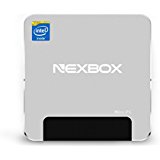
On the one hand, for a desktop PC, it’s tiny: 5-by-5-by-1.3 inches, small enough to fit easily into a briefcase. It’s light, too – about two pounds. Despite its small size, it comes with 4 gigabytes of RAM, a 64-gig hard drive (expandable with a micro-SD card and even an attachable hard drive). It comes with Windows 10, has four USB ports, one of which is a high-speed USB 3.0. There also are an HDMI port (a  short cable is included), bluetooth and a VGA port. Both the HDMI and VGA ports are designed for attaching the Nexbox to a monitor or TV, and therein lies the other hand.

A tiny desktop PC

I have mixed feeling about the Nexbox mini PC.

On the one hand, for a desktop PC, it’s tiny: 5-by-5-by-1.3 inches, small enough to fit easily into a briefcase. It’s light, too – about two pounds.

Despite its small size, it comes with 4 gigabytes of RAM, a 64-gig hard drive (expandable with a micro-SD card and even an attachable hard drive). It comes with Windows 10, has four USB ports, one of which is a high-speed USB 3.0. There also are an HDMI port (a  short cable is included), bluetooth and a VGA port. Both the HDMI and VGA ports are designed for attaching the Nexbox to a monitor or TV, and therein lies the other hand.

The Nexbox is a fully equipped mini PC

The $183 PC has to be connected either to a TV or a computer monitor. If  you don’t have a monitor handy, like when you’re traveling, you’re out of luck. If you do have access to a monitor, you still have to carry the HDMI or VGA cable with you. You don’t have to carry a TV with you, however.

My full-size desktop monitor is connected to the PC with an HDMI cable, so I simply disconnected one end from the computer and attached it to the Nexbox. The picture quality on my high-end monitor was quite good.

You also have to carry either a bluetooth keyboard and mouse or ones than plug  into the USB ports. My bluetooth keyboard did not pair with the Nexbox, so I had to use one that attached to the box via USB.

The box has a quad-core Atom processor. It’s not very fast for much more than word processing and Internet. It has only the slower 2.4G wifi capability in a world where 5G is standard on most PCs. The 2.4G wifi makes loading web pages a bit slow, a deal-breaker in itself.

The best part of the device is it will handle a 2.5-inch extra hard drive, and USB drives can be added, too. But one screw on the bottom plate of the Nexbox wouldn’t move. Figure that the extra drive and plate that holds it in would add at least another pound. It would be bulkier, too.

Then I did the math:

Nexbox — $183 (on Amazon)
Portable bluetooth keyboard and mouse — $35
64-gig MicroSD card — $40
Extra hard drive — $60
VGA cable, if you need one for the monitor — $8

Or, about $300, and that doesn’t include a monitor. Using a TV would make that expense go away. A basic monitor costs at least $100 from Dell or HP. Then there’s the weight. With the box, attached extra hard drive, keyboard, mouse and cables, you’re on the serious side of 5 pounds. That puts it in the league of chrome books and basic laptops. A very basic laptop costs about $250 or less, while a chromebook, which the box most closely resembles, comes in at less than $200. Naturally, a laptop or chromebook already come with a built-in keyboard and a monitor. If you’re a Mac person, Apple’s Mini, which is similar in size to the Nexbox, comes with a 500-gig hard drive and a much faster processor for $500.

There are cheaper and smaller devices that compare to the features the Nexbox has; they start at less than $100 for a device that looks like an oversize thumb drive, and there are several in the Nexbox price range. I didn’t try any of the others.

So, what to do next? I have a serious case of buyer’s remorse, especially given the slow wifi speed and the extra peripherals I’d have to take with me on the road. It will either end up in my “why’d I buy this?” box, or it will be returned.

If you’re looking for a small, portable PC, get a chromebook or a laptop; if you like gadgets – and the Nexbox fits my definition of a gadget – something I can live without – you’ll love the Nexbox.

Link-to-Cell Bluetooth Convergence Solution

The stay-at-home phone

When my fellow geeks gather for our weekly summit, the conversation centers around the merits of the iPhone 7 Plus over the Galaxy S7 Edge Android phone. Most of us have iPhones; still, I have to admire the curves of the Edge. So when I started touting the merits of my latest acquisition – a landline phone – there was nervous laughter along with tsk-tsking. I sensed the stirrings of a movement to cast me out of the club. But I held my ground.

The stay-at-home phone

When my fellow geeks gather for our weekly summit, the conversation centers around the merits of the iPhone 7 Plus over the Galaxy S7 Edge Android phone. Most of us have iPhones; still, I have to admire the curves of the Edge.

So when I started touting the merits of my latest acquisition – a landline phone – there was nervous laughter along with tsk-tsking. I sensed the stirrings of a movement to cast me out of the club. But I held my ground.

Connecting cell phone to landline phone

The official name of my new phone is the Link-to-Cell Bluetooth Convergence Solution. It sounds like the kind of phone that comes with a pocket protector and a mechanical pencil that has a  worn-down eraser.

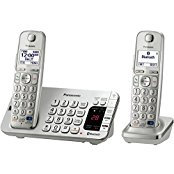
How to describe it in layman’s terms? First off, the phone part is impressive. Both the base unit and the handset have large keys. It’s not so much that I have big hands, as the size of the keys means I won’t have to grab my glasses whenever I want to dial a call. It’s heavy, so when I use the base set’s speaker phone, I can press the speaker keys without the base moving around. The speaker feature on both the handset and the base produces clear, volume-adjustable sound. There also is an answering machine on the base.

But where the phone shines is its ability to make and answer cell phone calls. Or to even hand off a cell phone call to the phone’s base. Up to two cell phones can be paired, via Bluetooth, to make and receive calls. Instead of using the speaker on the iPhone, I use the speaker on the base. If I’m on another call using the Panasonic landline component, I can put that conversation on hold while using the cellphone.

The landline phone is capable of receiving talking text message alerts that say whom the text is from (but not the message itself). Contacts’ phone numbers can be imported from the cell phones. There’s a talking caller ID and a competent operating manual. Landline calls can be forwarded to a cellphone if you have that service with your landline phone provider, and call blocking is available. The Panasonic  works great with my MagicJackGo ($35, including a year of unlimited calls within the U.S. and Canada. More information: http://www.magicjack.com).

Setting up group calls is straightforward. Since my two cellphones are linked to the landline, three calls can be juggled at the same time. And it will help locate a misplaced cellphone by simply pressing the “locate cell” button. If you’re lost at home, press the “locate/intercom” button to communicate with the base using a handset near you. All you have to do is pick up the nearest handset – the base unit will handle five handsets.

Also available are multiple phone books, speed dialing, even the ability to store strings of numbers for retrieving voice mail from your landline carrier (if you don’t want to use the built-in voicemail). Although I don’t have a Bluetooth headset, the phone is capable of linking to one.

Oddly, the time that’s displayed on the handset defaults to a different time zone, no matter how many times I reset it. I also had to set the handset phone to the loudest level available in order to hear some conversations. That wasn’t a problem with the base unit.

If you don’t want to receive calls, the ringer can be turned off, which is programmable for the hours you choose. If you have voicemail service from your landline provider, the message will be stored there; otherwise it will go into the phone’s voicemail. If you want to receive a call from a certain person, the night mode can be programmed to override the do-not-disturb feature.

Those are the high points.

When I finished hitting all those high points, the geeks who were impressed at first weren’t moved to buy the phone, even when I mentioned the price – $40 for a refurbished base and one handset at Amazon. They were too busy admiring the curves on the Galaxy Edge.

The unit I bought is model No. KX-T456CSK, but there are a number of similar phones at http://www.panasonic.com.

Is DasKeyboard More Than Just Hype?

Typing as if it’s 1981

DasKeyboard is one of the most expensive non-gaming computer keyboards on the planet. Its name suggests that it was made by German engineers whose day job is designing BMWs or Mercedeses. Its feel and clicks mimic the original IBM keyboards. It’s sturdy, heavy, has a USB cable as thick as a small garden hose, and those clicks are guaranteed to keep you awake when you’re  typing.

Typing as if it’s 1981

DasKeyboard is one of the most expensive non-gaming computer keyboards on the planet. Its name suggests that it was made by German engineers whose day job is designing BMWs or Mercedeses. Its feel and clicks mimic the original IBM keyboards. It’s sturdy, heavy, has a USB cable as thick as a small garden hose, and those clicks are guaranteed to keep you awake when you’re  typing.

Clickity clack

But fact is stranger than fiction. The keyboard, despite its name, actually was designed in Austin, Texas, and assembled in China. Another fact is that, in my experience, it’s prone to problems that seemingly can’t be fixed. I should know – I forked over $169 for the top-of-the- line DasKeyboard 4 Professional. That I miss my ancient (and wireless) Microsoft keyboard  is testament to how unimpressed I am with the new keyboard. (The Microsoft keyboard , by the way, makes no pretenses about where it was made – in China.)

The folks who design the DasKeyboard claim its key inscriptions are laser-etched. If so, someone must have been asleep at the laser. Online complaints say the home keys and other often-used ones often fade. In fact, to take the suspense out of the fading-key-inscription experience, one model of the keyboard comes with blank key caps.  Some users report that for touch-typing, it is actually easier to use than models with the keycap etchings.

So far, after more than a year of use, the key cap inscriptions look almost new.

As if the etching complaints weren’t enough, my keyboard mysteriously repeated o’s when I would pause typing. I sent it back to the manufacturer on their dime. They couldn’t replicate the problem, so they sent it back to me after replacing a part called the logic board. Problem solved.

And then the 2.5-pound  keyboard began moving around on my desk as I typed. A technician responded to my email complaint within an hour. He suggested that I put the keyboard on my lap and bend the right side. Now, for all its negatives, the keyboard is built as if it were made of cast iron. Bending it would have meant putting it in a vice.

Their next suggestion was removing the combination ruler/keyboard elevator, a device that, as its name suggests, can be used as a ruler. Its real function is to raise  the back of the keyboard about 5 degrees, just where it feels right. Closer inspection showed that the ruler was warped. A new one was sent out, but that ruler was warped, too, so I had to get used to a moveable typing experience.

That aside, what other keyboard than the Das allows you to customize the way the keys look? One user designed vintage Smith-Corona key caps.

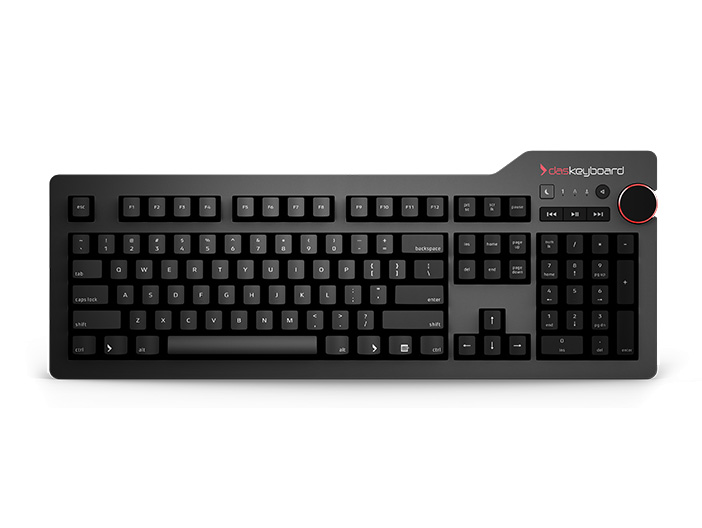
The Keyboard 4 Professional model, which I bought, has an oversized volume key and separate keys to put the computer to sleep and mute the sound. Compact keyboards also are available, as is one for Macs.

Prices range from $139 for the compact keyboard to a whopping $169 for the Professional model. The Mac keyboard goes for $175. That’s extravagant, but if  you must have one of these, I’d recommend the Professional model, with its dedicated number keys, and, of course, there’s the oversized volume knob.

All their keyboards have a feature for super-fast typists called “full n-key rollover,” which allows keystrokes to be stored, then played out, no matter how fast you type.  Those noisy keys, by the way, are gold-plated, and there are two USB hubs at the rear of the keyboard.  

For folks working in close quarters with others, the company does make quiet keyboards, too. But the biggest attractions – what got me to fork out $169 – are the vintage IBM clicks, tactile feedback and weight of the keyboard.

After all of my complaints about quality and its pseudo-German name, I will allow that it does enable you to type as if it were 1981. Users rave about it to the point that it has almost a cult following. The company also will have a new line of Internet keyboards that are backlit (yay!) and let you customize how you get information in the cloud. Stay tuned.

So, if you’re in the market for a keyboard that the whole house or office can hear and you don’t mind having it tethered to a USB port on your PC or Mac, and you’re in need of a replacement keyboard when your sturdy wireless Microsoft or Logitech model finally heads south, then go for it. But if I had to do it over again, I’d get a Microsoft or Logitech keyboard and pocket the change.

Should you buy a refurbished PC?

The best and worst ways of buying refurbished

Why not just buy a new desktop PC, laptop or tablet? Money. Refurbished computers cost  far less than new ones. If you know where to shop, you can save hundreds of dollars over a new one and get the assurances that large, reputable companies provide.

It depends on where you buy it, but even great companies sell duds

There are a number of ways to buy a refurbished computer. The definition of “refurbished,” however, can vary widely. It can mean that it was tested and cleaned to like-new condition and comes with a generous warranty. Refurbished computers can be bought online from reputable companies that buy older computers from large companies. Or they can be bought on eBay or craigslist from sellers who refurbish their wares in their garage.

Why not just buy a new desktop PC, laptop or tablet? Money. Refurbished computers cost far less than new ones. If you know where to shop, you can save hundreds of dollars over a new one and get the assurances that large, reputable companies provide.

Steep discounts on PCs

Let’s start with the worst way to buy a refurbished computer.

I’d like to think that sellers on eBay and craigslist are honest about what they’re selling, but that’s not always the case.

A friend got a great deal on eBay for a MacBook Pro. The seller said it had been refurbished and was spotless, that it had 16 gigs of RAM and was loaded with Office and other software. All true. He even threw in a copy of Windows so it could be used on a dual-boot system. But I’m wary of PCs than come with software you don’t have to pay extra for. It’s usually dishonest, and perhaps illegal. Sadly, after my friend spent $750 on the computer, it shut down when he was using it, and died only weeks after he received it. Turns out that the MacBook is a 2012 model, which in my book puts it well past middle age.

The seller didn’t tell him that, and the buyer didn’t ask. A new motherboard cost him $575. Add them together and he could have bought a later-model refurbished one at http://www.apple.com for less. Or even a new one for a few hundred dollars more.

Contrast that with the experiences I’ve had buying refurbished computers and iPads directly from Apple.

Apple tells consumers up-front that while some units were returned for mechanical defects, their products are tested to be fully functioning.  Their website always displays the manufacture date and a complete list of specs, such as RAM and hard drive capacity. The units are spotless. B-grade ones don’t make the grade at Apple. And they back their products with a one-year warranty, the same one that’s offered on new Apple products. That warranty can be extended with an AppleCare policy, which includes two or more years of parts and labor and access to Apple’s superlative tech support.

But not all big companies have the same idea of quality control. A refurbished Dell PC that I ordered last year arrived stone dead. I sent it back, and it was returned stone dead. Obviously, no one had bothered to turn it on. So much for Dell’s idea of quality control. It took months to get Dell to replace it. By then, any warranty that was left had expired. I was so disillusioned with the experience that when the working replacement arrived, I donated it to a school.

That takes us to companies that refurbish a variety of computers and peripherals.

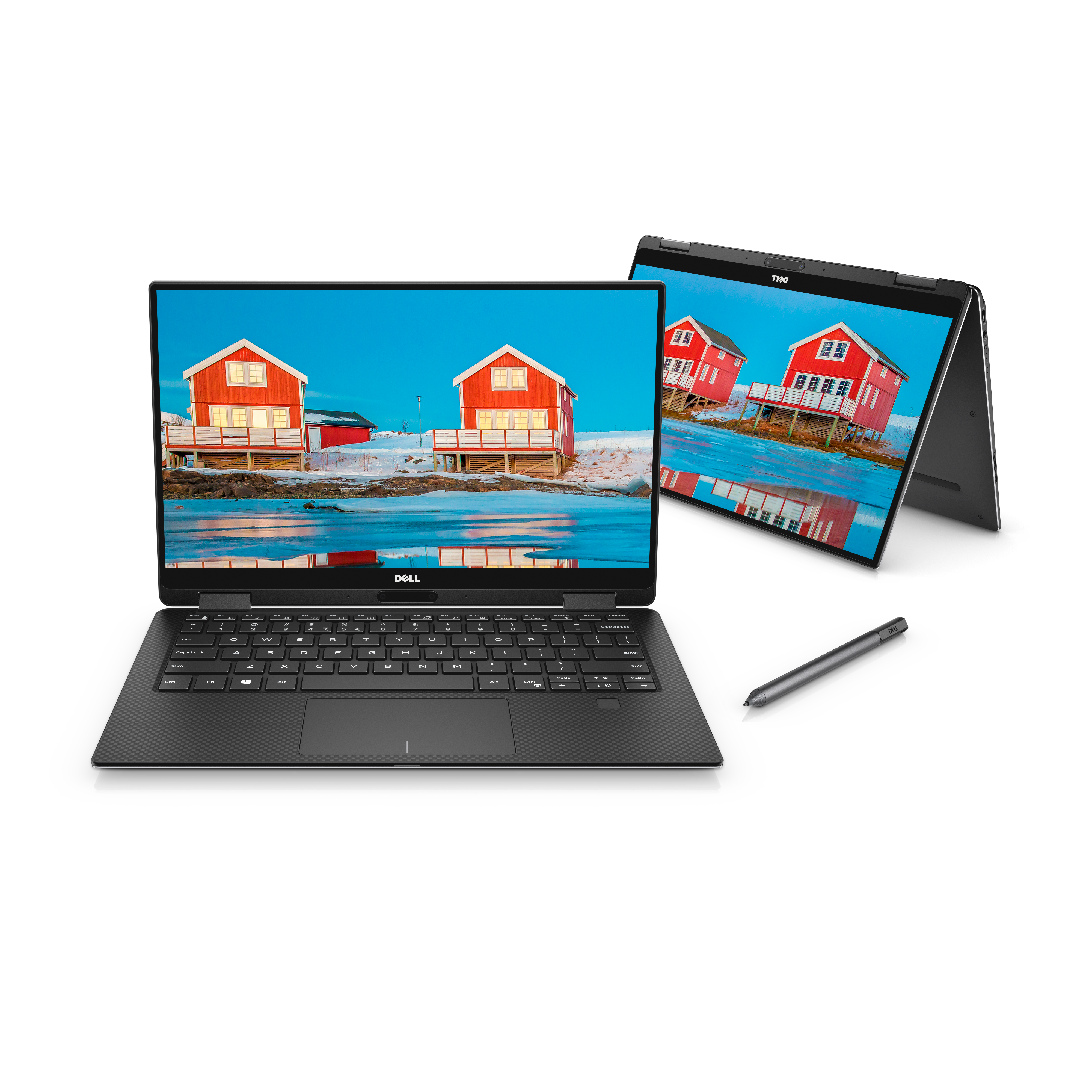
The deal at refurbees.com was for a refurbished Dell 2-in-1 laptop/tablet for $229, complete with a stylus, wireless, webcam, 4 gigs of memory and a 320 gig hard drive. I was smitten. I’d always been curious about these 2-in-1s.

I upgraded the RAM to 8 gigs for $55 and paid $5 for a carrying bag. Refurbees offers a 90-day parts and labor warranty that can be upgraded to a year for $49. Shipping is free.

Refurbees buys used PCs in large lots from other companies, then offers steep discounts. It arrived within a week. It was spotless – no scratches on the screen or on the laptop’s body. It was hard to tell it from a new one, except it was old technology. I’d guess that it was manufactured in 2013. It was very slow and heavy and the wireless was very slow. Other than that, it worked fine. The battery held a charge, and the stylus was fun to play with. I wrote this column on the notebook part. If I have one nit to pick, it was trying to find the license key for Windows 10. There’s no documentation – you can get that online – but I finally found the key, which was in tiny characters on the bottom of the unit.

Refurbees’ stock changes daily. As I’m writing this, Refurbees is offering laptops and desktops from Dell, HP and Lenovo for about $200, some more, many less. They also sell monitors, RAM and hard drives. A 500-gigabyte solid state drive is selling for $85. And when their products aren’t in pristine shape, they say so by designating them as B-grade.

Sad to say, because the laptop was so slow and heavy, I sent it back for a refund – it had been fewer than seven days since it arrived. The return process was polite and efficient. I paid return postage.

If you want the latest technology, buying new makes sense. However, if you’re willing to settle for a computer or tablet from a previous generation, refurbished ones can be a great deal. Just be careful where you shop.

A Simple Key to Password Protectors

The Dashlane two-step

When it comes to cyber safety,  a second line of defense could make the difference between being hacked and surfing safely, especially if all it takes is a unique password and an inexpensive device called the YubiKey to keep consumers and businesses safe.

The Dashlane two-step

When it comes to cyber safety,  a second line of defense could make the difference between being hacked and surfing safely, especially if all it takes is a unique password and an inexpensive device called the YubiKey to keep consumers and businesses safe.

I’ve begun using the YubiKey, a slimmed-down thumb drive to complement my password program, Dashlane, which I use to manage all my sign-ons, user names and unique passwords.

YubiKey isn’t always reliable.

First, a word about passwords:

If you’re among the millions of  Americans who are victims of identity fraud, one reason you’ve been targeted is because the passwords you use are ridiculously easy to hack.  Anyone who uses “password1234” for all the websites he visits is asking for trouble. Without a second line of defense you’re toast.

A typical first line of defense is Dashlane, a password program I’ve been using for several years. Dashlane will generate passwords like “^%$3&0)(+” that are nearly impossible to hack. It also will keep track of the passwords you already use – but it will warn you that “password1234” will open you up to the kind of grief that will keep you on the phone for hours, probably days, trying to straighten out your financial and other accounts. If you’re wondering why Amazon is sending you receipts for stuff you didn’t order or receive, and the charges are showing up on your credit card statement, you’ve been hacked. Change your password, and do it quickly. In fact, let Dashlane do it for you. And let it generate new, unique passwords every week for all the websites you use.

You’re probably wondering how in the world you can remember a password like “^%$3&0)(+”. Not to worry. When you launch Dashlane, you enter a master password that only you know. If you forget that password, you’re in deep trouble, because even the folks at Dashlane can’t get retrieve it for you.

Dashlane records your passwords as you go along. It will remember your user name and password for Amazon, your bank and just about any other website. After that, you need only click on an impala icon at the top of your screen, scroll down to Amazon, for example, and it enters your user name and password and signs you in to the site. Dashlane can enter your credit card information – but only if you give it your master password – and fills out the blanks, such as name and address, in forms.

Dashlane can be installed and passwords synced on your Windows PC, Mac, phone and tablet. Each time you call up the program, you have to enter the master password, and each time a new device is activated you’ll get a code by email that will unlock the account. That’s enough to discourage most hackers, but, like any other security program, it’s not foolproof.

If you’re convinced that Dashlane is for you, there’s still the issue of the master password – what if it gets hacked?

The solution is two-factor authentication, a nerdy term that means you have a second level of security. That’s where YubiKey comes in.

Dashlane has partnered with Yubico, which manufactures a collection of USB keys that can be programmed easily to act as a second line of security defense. You can’t launch Dashlane or any other program or website without your master password and the YubiKey.

 If you don’t want to pay between $18 and $50 for a YubiKey, you also can download a free Google or similar authentication app for your phone and generate numerical pass codes to sign on to Dashlane. But I like the key — when it works, which in my tests didn’t always happen.

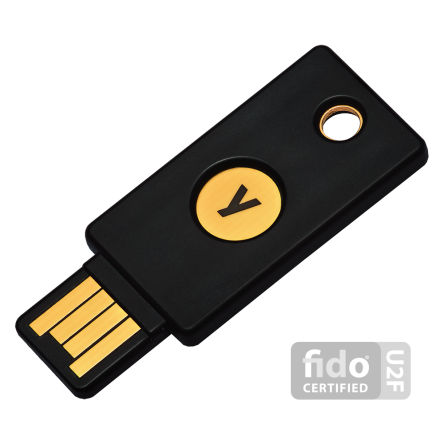
The YubiKey is  about the size of a very thin thumb drive. It plugs into a USB slot on  a PC or Mac, and when I leave my desk, I log out of Dashlane and take the key with me. Even if someone knows my master password, they can’t launch the program without the YubiKey. When I return to my desk, I type the master password, insert the YubiKey, tap on it, and Dashlane launches.

But after writing my initial review, I encountered problems with the YubiKey, and despite several sessions with tech support, the key still is flaky. A tech said they are working on the problem I’m having, but even a workaround Dashlane sent me didn’t solve the problem. I recommend using the phone app authenticator instead.

To get a free authenticator, go to your phone’s app store and search for “authenticator.”  After scanning a bar code that Dashlane and other programs provide, the Google authenticator generates a series of numbers that essentially do the same thing as the YubiKey does – unlock  Dashlane or other programs and websites.

The company says YubiKeys work with dozens of other programs and websites, including Facebook, Google, Symantec, Dropbox and other password programs such as KeePass. Dashlane has both free and paid versions; the latter has many more features. It costs $40 a year, and is well worth it. The YubiKey also is supposed to work with Android phones; an Apple version is in the works. Tech support is by email Questions are answered promptly. Solutions are another matter.

For more information, visit: www.dashlane.com and www.yubico.com.

Photoshop Elements vs. Paintshop Pro

Picture-perfect

Count me as among those who can hardly open a file in Photoshop, much less get rid of an errant lamp post growing out of a subject’s head.  It’s a complicated program that takes much time and practice to use effectively. To master Photoshop is a badge of honor I don’t happen to wear.

Battle for the picture-perfect

Coming from a newspaper background, I’m familiar with the power of Adobe Photoshop, which photographers swear by and editors swear at. Count me among the latter group.

PaintShop Pro is inexpensive and powerful

While it’s strictly forbidden for news photographers to doctor their images – deleting an unwanted person, for example – that doesn’t mean those kinds of edits don’t slip past editors. After all, when a photographer transmits his work from Singapore, who’s to know that there was a joker making a funny face in  the background? Ultimately, photographers get exposed –many times by other photographers – when the photo is published. That’s why you see former news photographers going door-to-door taking family portraits ($10 for a sitting, with two free 8 by 10s).

Count me as among those who can hardly open a file in Photoshop, much less get rid of an errant lamp post growing out of a subject’s head.  It’s a complicated program that takes much time and practice to use effectively. To master Photoshop is a badge of honor I don’t happen to wear.

For many years, I used Elements, Photoshop’s inexpensive little brother. Elements has modes for impatient amateurs such as myself.  The Quick mode makes photo editing almost child’s play, while the Expert mode delves into the mysteries of layers, color gradients, skin tone adjustments and more.

Like a fat bear whose curiosity makes him wonder whether the next hive has sweeter honey, I couldn’t pass up a sweet offer to buy PaintShop Pro X9. I had an earlier version, and found myself using it more and more. There’s no dumbing-down in Corel’s PaintShop. While PaintShop has most of the advanced features of Elements, for my money, it bests Elements by an elephant’s nose.

Like Elements, PaintShop has a photo organizer that puts your digital images in some semblance of order. From there, the program takes you to “adjust” mode, where you can add effects, and finally to “edit.”  Along the way, PaintShop holds your hand. I’ve never used a program that has so many tutorials – many are videos – and how-tos.

For example, I hadn’t heard of a photo-editing program having scripts, and I don’t mean the kind actors use. A script takes a number of commands that can be executed with the click of a mouse to enhance a photo.

Want to add a purple haze to enhance a photo? Click on the “purple haze” script that comes with the program. PaintShop comes with some scripts, and more can be bought.

Using a script, the subjects in the photo can be in stunning color, while the background is in black and white. Cover your eyes, news photographers, the color of eyes can be changed. And, like Photoshop, sin of sins, you can move people around. They actually tell you, proudly, how to do it.

Multiple photos can be merged to create a stunning photo , color gradients can be applied, shapes such as hearts can be overlaid on a photo. If you’re processing a number of photos – batch filing – you can apply the same effects, such as “smart fix,” which controls all facets of exposure, to all of them.

The good folks who produced the program hold your hand as you’re transported to the magical world of  the online Corel Discovery Central. There you’ll find tutorials on every facet of PaintShop. Most of the tutorials are free, but for hyper-complicated projects, there are fee-based tutorials that can last for hours.

The tutorials are easy to understand and take you step-by-step through the paces of doing things to a photograph you probably never thought were possible, from the “getting started” tutorial to using a template to make a collage. Speaking of collages, after watching the template tutorial, I arranged a beautiful (if I say so myself) collection of photos of my grandkids, printed it on an 8 by 10 sheet of photo paper, and gave it to my daughter to hang on her wall.

I find that I’m using PaintShop for most of my photo-editing sessions. It’s much cheaper than Photoshop – it costs about the same as Elements – and is geared more to experienced amateurs, graphic designers, students and business uses. I found that I could do more in less time using PaintShop over Elements.

PaintShop Pro costs $80, although it’s often on sale for less. A more sophisticated version, PaintShop Ultimate, ups the ante by $20, although it, too, is often on sale.

A pop-up ad when I was using an earlier version of PaintShop gave me an offer I couldn’t refuse — $15 for the full version. No one had to give me a tutorial on how that was a great deal.

For more information, visit: www.corel.com

Get Off of My Cloud

Clouding my judgment

terabyte USB drive is right: $50 for a brand-name one on Amazon. But I want more. I want a home-based cloud backup drive (because a friend has one and raves about it). I want to be able to back up to it, even though the drive could be stolen or destroyed by fire.

Gotta-have-it is clouding my judgment

My hard disk is bursting at the seams. A sensible person might simply get a portable USB drive and move files onto it and then delete the files on the PC. The price for a terabyte USB drive is right: $50 for a brand-name one on Amazon. But I want more. I want a home-based cloud backup drive (because a friend has one and raves about it). I want to be able to back up to it, even though the drive could be stolen or destroyed by fire.

A backup drive I don’t need

For the record, I have a cloud backup program, Carbonite, which is creating a mirror image of my hard drive as I write this. It takes  a “snapshot” of my drive once a day. If my hard disk fails – as it is about the do – it will restore its last snapshot, including Windows, programs and files, on a new drive. But … if my motherboard gets fried, I’m out of luck. Carbonite will restore a snapshot only to the same computer.

I also have the regular version of Carbonite backing up individual files to the cloud. But … if my motherboard gets fried, it would take days to get those files back.

And yes, I upload sensitive files such as this column (hah!) to SugarSync, another fine cloud program. So I should be fine with that inexpensive USB drive to make yet another backup of my files. But what fun would that be?

It’s been more than three years since I last reviewed the Western Digital My Cloud backup drive. I sent it back because the software was seriously clunky. The software has gotten slicker, but there still are two software components that must be used to make the drive work. They look like they’re intuitive, but after several hours with Western  Digital tech support, I simply was not able to make a  backup of  my bursting hard drive.

Maybe the drive is defective, one tech tells me as I run a diagnostic test. That takes 10 hours, and the disk is found to be healthy. Other techs gruffly teach me how to use the software. As I listen, I wonder why it’s necessary to teach anyone how to operate a backup program. Designate which drive is the source, then designate the backup drive. Not so simple with the My Cloud.

The My Cloud plugs into a router, not to a computer. By setting up users, complete with passwords, several PCs or Macs can back up to the My Cloud drive. Don’t be fooled by the “cloud” part of the name. Instead of backing up to a server somewhere in North Dakota, where it could be vulnerable to hackers, the Western Digital drive is a cloud that can be accessed wherever there’s wifi. This would be especially useful on a phone or tablet on which files and photos can be shared. Those files can be password-protected, or shared files can be set up when you want others to see those files or photos. It’s sort of like Facebook, but in this case, your files aren’t available to a million friends.

If the backups don’t work, as mine didn’t, files can be copied directly onto the cloud drive, but the same thing can be accomplished by copying files onto that $50 portable USB  drive. The My Cloud drive costs $140 for 2 terabytes of storage; an 8 TB drive costs $300. There also is a dual drive model, in which files that are backed up to the primary drive are also backed up to a second drive. Those drive have a maximum capacity of 16 TB and range from $300 to $800. But if those drives get fried, or thieves take them, you’re seriously out of luck as far as backups are concerned. That’s where real cloud backups can be a better choice. Most offsite cloud backup servers have redundant servers.

Now, for a test of the real reason I bought the My Cloud – accessing files on my iPhone. The files were there when I signed in, but they were grayed out; I couldn’t open them.

Back to Western Digital offshore phone support (which is free for only 30 days). More fiddling. And then the line went dead. He hung up on me. Freed of a tech who didn’t know what he was doing, I did some fiddling on my own. Several steps in the manual simply were wrong – I was able to view some – but not all – of my files. When I was able to open a file, its contents popped up right away, as long as they were documents or photos. But any other type of file, including some pdf’s, simply wouldn’t open.

Packaging and returning the My Cloud drive was the easiest part of a mess that took me hours and successive days to troubleshoot. I had to call Western Digital a total of eight times and even then I couldn’t make the drive work. I’m back to copying files on an external hard drive – the $50 solution . That process is reliable and easy.

How do I access my files when I’m away from home? Easy. I take the portable drive – or a thumb drive — with me and view my backups anytime, anywhere on my laptop. No wifi connection needed. And no more experiences with Western Digital tech support hang-ups.

Fact is, I already can view files that were backed up to my real cloud services, Carbonite and SugarSync.

Sometimes “I gotta have it” should be answered with “no you don’t.”

Is the Ring Doorbell More Than a Gimmick?

A doorbell that shows you who’s ringing it

It’s vacation time at a rental house overlooking the Pacific Ocean. A synthesized bell rings on my laptop computer. The UPS guy is at my home’s front door, 250 miles away. I tell him, remotely, to leave the package on the other side of the gate, and he complies. For all he knows, I’m at home, and not hundreds of miles away and enjoying the cool breezes and the relaxing sound of the surf.

A doorbell that shows you who’s ringing it

It’s vacation time at a rental house overlooking the Pacific Ocean. A synthesized bell rings on my laptop computer. The UPS guy is at my home’s front door, 250 miles away. I tell him, remotely, to leave the package on the other side of the gate, and he complies. For all he knows, I’m at home, and not hundreds of miles away and enjoying the cool breezes and the relaxing sound of the surf.

You’re always home

What’s going on here?  An innovative security device called Ring is doing its job.

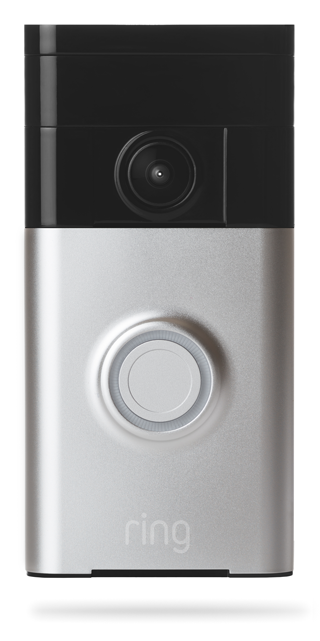
Ring  has been installed where my low-tech doorbell, capable only of activating a bell, once stood. Ring, a $200 device, is a doorbell, and much more.

Ring works initially on a wifi network. With the optional ($30) a year component, it stores footage, including sound, anytime there’s motion detected at the door where Ring is installed. But once Ring’s sensors detect motion, an alert is triggered on the faraway PC or smartphone. The footage can be viewed immediately or later.

My younger son was watching our house while we were on vacation and taking in the mail and newspapers. Each time he came to the door, Ring would notify me that there was motion detected on its fish-eye camera. I could hear him talking to me (“Hi,Dad, how’s the surf?”) I’d answer, “The tide is in and the sunset is beautiful!”

The mailman also makes his appearance on his daily rounds. I totally confuse him by thanking him over Ring’s remarkably good speaker. Soon, though, he gets used to it, and saids that I was welcome.

Some folks call Ring a gimmick, but when it’s used as part of a home-security system, it makes even more sense. I recently replaced my home-monitoring system with one that’s not wholly dependent on my wifi setup. Instead, it uses a cellular chip as a backup that takes over when the wifi component fails.

Most burglars understand that a home-security system such as my new one can be defeated simply  by cutting the cable connection and the power. However, my new system has a backup battery that can last as long as three days.

There was a time when my security system consisted of a big ditsy standard poodle who barked at her own shadow, the mailman and anyone or anything that approached the house, including the occasional tree branch that fell to Earth. Potential burglars could hear him all the way down the block, and in the 10 years that we had him, no one dared to break into our house, not that we have much to steal. Sadly, we had to give Rufus to a new owner when our grandson developed an allergy to him. Our neighbors were delighted when he was finally gone, too. That’s when we started looking into other ways to protect our home.

When a new security monitoring company offered us a free Ring, we were sold. The only downside is that some people don’t like the idea of being filmed when they come to the door.

Is the ring a gimmick or an integral part of a security system? I’m convinced it’s the latter. It’s almost as good as a barking poodle.